

How to choose quality and reliable windows amidst a flood of advertising?
If you're building a house, choosing windows is one of those once-in-a-lifetime decisions. Windows affect the energy efficiency of the building, living comfort, interior appearance, and how you'll feel at home every day. However, it's not easy to navigate. Advertising pours in from all sides, every manufacturer highlights their solution, and the differences between various types of windows often get lost in marketing jargon and technical terms.
At MINTAL, we don't just approach windows as merchants. We design, manufacture, and install windows, which is why we view them as a functional system of solutions, not as a collection of individual components. A quality window is not the result of one good material or a number in a technical table. A functional window only comes into being when the construction, materials, glazing, hardware, installation, and connection details to the building all work correctly together. If any of these elements fail, the problem often doesn't show up immediately. It only appears after years of use, when repair is already complicated and costly.
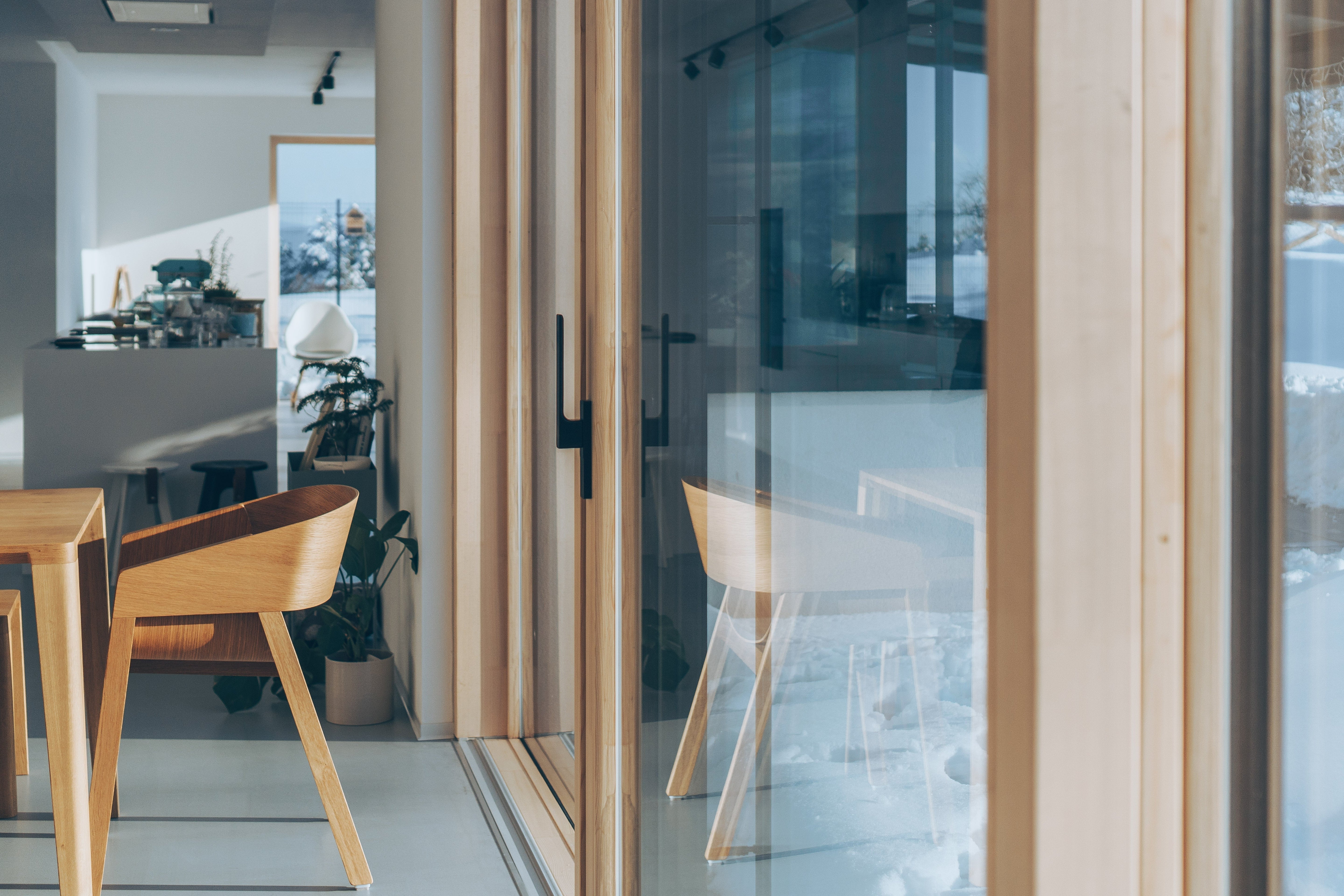
Wood-aluminum windows offer a combination of natural aesthetics and technical durability. Wood in the interior feels warm, natural, and timeless, while from the exterior, the structure is protected by durable aluminum cladding. Windows thus do not become a disruptive technical element, but a natural part of the house's architecture. From a technical perspective, wood is an excellent natural insulator, and in combination with aluminum, a structure suitable for low-energy and passive houses is created. The result is a stable indoor temperature, higher living comfort, and lower heating and cooling costs.
Another major advantage is the dimensional stability of the laminated wooden beam, which minimizes material deformation. This is especially important for large glazed areas and portals, where the structure must function precisely and reliably over the long term. The aluminum cladding also protects the wood from weathering, which significantly extends the lifespan of the entire window. With proper care, wood-aluminum windows can reliably serve for several decades.
Aluminum windows have their place especially in modern buildings where high strength and slim profiles are required. From a physical point of view, however, aluminum naturally conducts heat, which means it has a lower surface temperature indoors than wood. Therefore, it can feel colder to the touch and in perception. To reduce heat loss, aluminum profiles must use various technical solutions to break thermal bridges. Nevertheless, the material character of aluminum in the interior remains distinctly technical and does not contribute to the regulation of the indoor microclimate as naturally as wood.
Aluminum also reacts more significantly to temperature changes. In larger structures, this can lead to slight deformations or changes in settings over the long term, which do not appear immediately but gradually over time. This is precisely why the difference between wood-aluminum and aluminum windows often only becomes apparent after years of use, especially in the sense of comfort in the interior, stability of function, and the energy balance of the house.
When choosing windows, it therefore makes sense to look at the solution as a structural whole, not just at individual technical parameters. The material, glazing, hardware, installation, and connection details must all work together as one system.
At MINTAL, we design, manufacture, and install wood-aluminum windows as one well-thought-out system. We work with top-quality components, proven technologies, and stay in touch with clients even after project handover. Our goal is for windows to function reliably and comfortably even after decades of use.
Share:
MINTAL ZEN - when design is not just about form, but about an attitude to life
What to watch out for when choosing windows